Celebrating Earth Day with South Parkdale Community Pollinator Gardens
Hidden under Parkdale’s sidewalks and boulevards is an ecosystem that’s fighting to flourish. For Earth Day this year, PARC wants to spotlight a local group looking to return Parkdale to its roots. We’re celebrating our partners at the South Parkdale Community Pollinator Gardens, and its members.
About the South Parkdale Community Pollinator Gardens
The South Parkdale Community Pollinator Gardens (SPCPG) is a neighbourhood organization that builds and maintains pollinator and habitat gardens on Tyndall, Springhurst, Spencer, and Dunn, right here in Parkdale.
Since planting their first garden in 2022, the group has grown to 14 gardens across the neighbourhood. SPCPG explores what it means to unlearn typical Euro-centric gardening practices, to work toward decolonizing our gardens, and to build green spaces that are welcoming to all.
Gardening as a Political Act
Ally is a PARC team member, and a leader in the SPCPG. She describes gardening as a political act: a reclaiming of land that has been stripped of its origin. One of SPCPG’s core missions is to help their neighbours understand that native North American plants aren’t just beautiful. They are essential to sustaining life on the land we inhabit.
The relationship between native plants and pollinators is ancient. Without native plants, we lose native pollinators. Without squash bees, there is no squash – the chain is that direct.
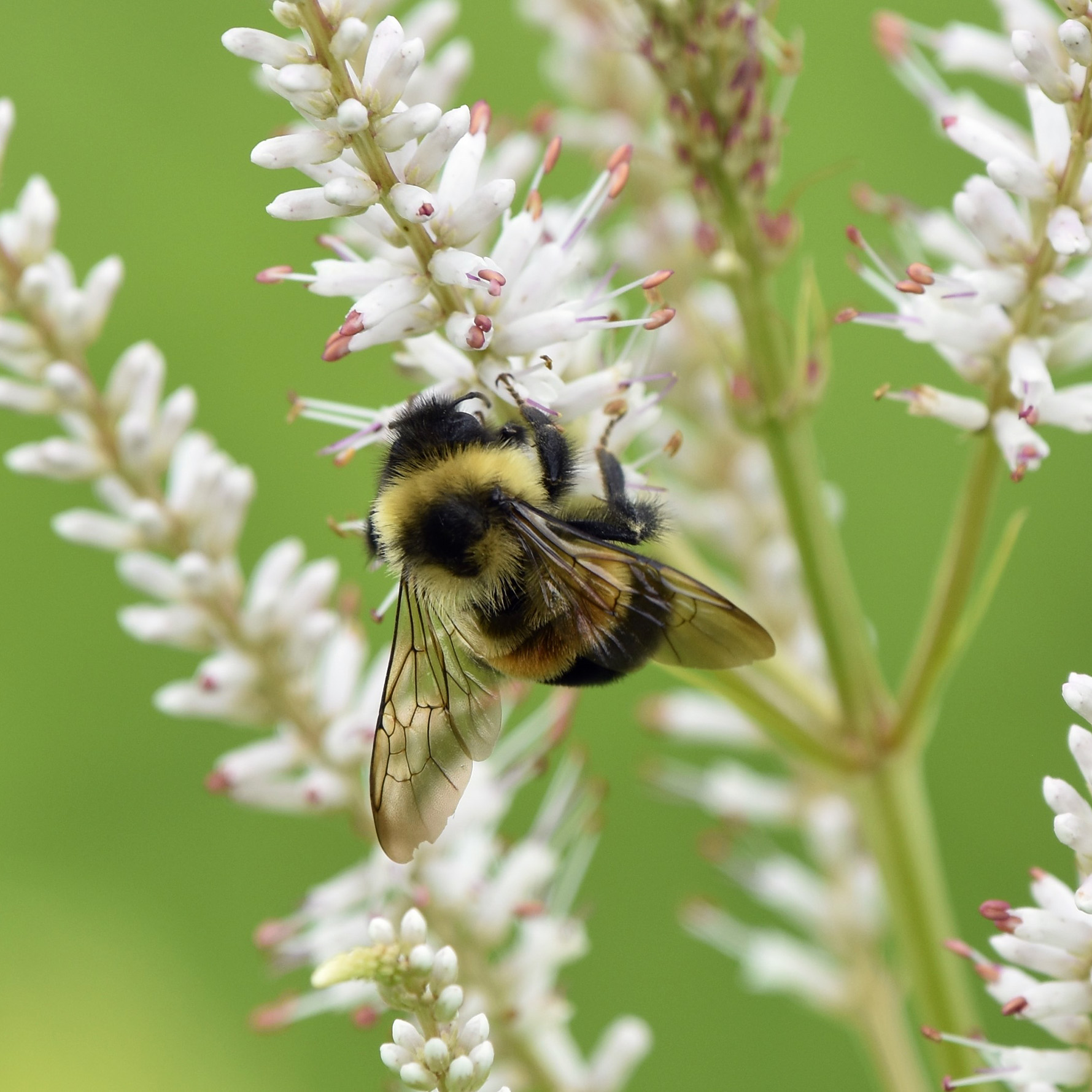
You might have heard that bees are becoming endangered. You may first think of honeybees, but they are actually European imports. It’s native bees — like the Rusty Patched Bumblebee — that are disappearing, because the plants they evolved alongside are being replaced by species that are invasive to North America. And it’s not just bees. Many things we do to take care of our garden, we do without thinking they would cause harm to nature.
- Pulling out milkweed and goldenrod removes critical host plants that species like the Monarch butterfly depend on to survive.
- Bagging dead leaves removes the overwintering habitat of firefly eggs.
- Cutting and removing hollow plant stems eliminate nesting sites for native bees.